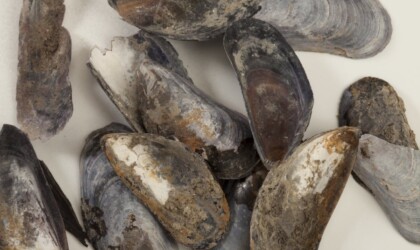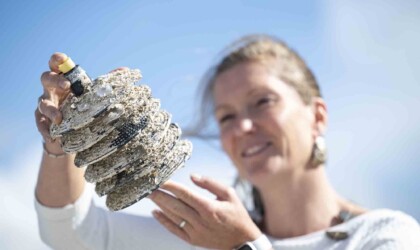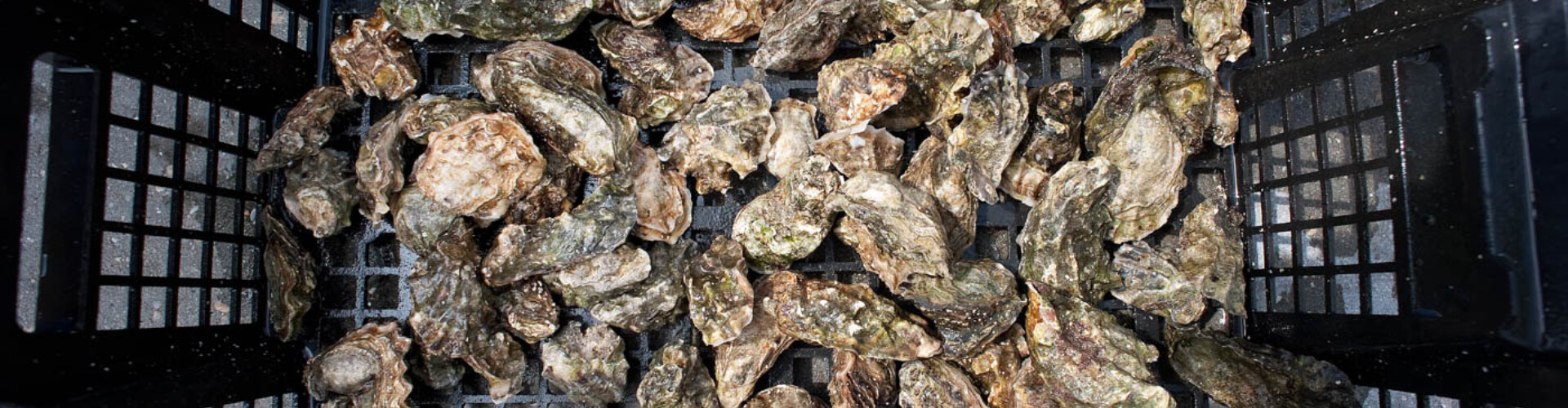
The cultivation of algae, seaweed and shellfish, called low-trophic aquaculture, can contribute to the global need for healthy and sustainably produced food. In the Netherlands, shellfish, such as mussels and oysters, are mainly farmed for the time being. Shellfish culture is concentrated in sheltered locations; in the Wadden Sea and Zeeland Delta. Because the available space in these locations is fully utilised, there is a need for cultivation space in the North Sea.
Locations on the high seas are dynamic and therefore difficult to access. One of the challenges in making the transition from cultivation in sheltered areas to cultivation on the open sea is remote monitoring of production at cultivation sites. Understanding growth and conditions on site are of great importance for growers to implement timely management measures. There is also an effect on production of factors such as size of starting material, number of shells per system, and type of system, as well as interim management measures and harvest timing. For growers, it is important to be able to calculate these effects of different scenarios, giving them insight into their business opportunities and profitability. In this project, a production prediction model is developed for this purpose, which allows production to be monitored in near-real time, depending on various cultivation and harvesting scenarios.
Understanding business opportunities
In addition, this project aims to give the shellfish sector an insight into the legal feasibility of scaling up low-trophic aquaculture at sea, and to provide the central government with starting points for realising policy ambitions regarding aquaculture at sea. This is done through a governance and policy analysis.
Cooperation
Research into the business opportunities, profitability and the legal framework of open-sea farming is being carried out by researchers from HZ University of Applied Sciences (leader) and Van Hall Larenstein University of Applied Sciences in cooperation with growers, their advocates, mbo institutions Scalda and Friese Poort and government.