Minor: Future Shores

In the minor Future Shores, you explore how coastal nature-based solutions help create safe and resilient deltas. You deepen your knowledge of flood risk management and learn how nature restoration strengthens the main coastal flood defences of the Netherlands.

When we talk about coastal nature-based solutions, you can think of engineering green dikes, restoring salt marshes, or nourishing forelands. These solutions use natural processes to reinforce the coast and stimulate natural functioning.

Design a nature-based dike

Together with fellow students, you design a nature-based dike reinforcement for a real client. Your project is linked to the Dutch Flood Protection Programme (HWBP) and European nature policies such as Natura 2000 and the Water Framework Directive. This helps you understand how national and European policies shape real-world projects.

Explore inspirational coastal examples

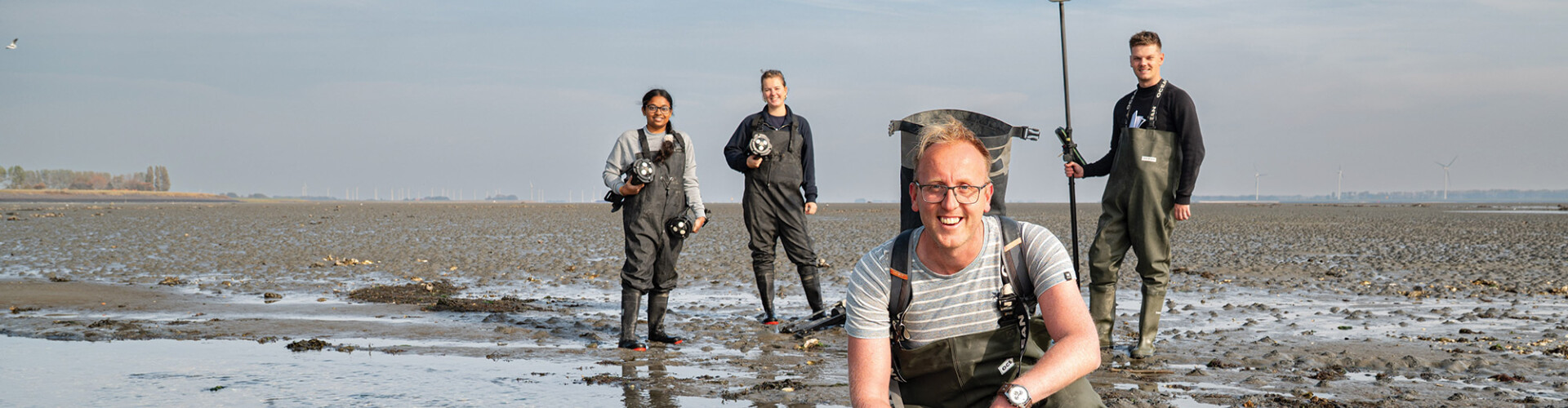
Starting from the nature-based perspective of a climate-resilient delta, the minor takes you on a journey through the Netherlands. You explore how nature can offer solutions to social challenges such as climate adaptation and spatial use. Through excursions in Zeeland and a three-day study trip across the country, you visit inspiring nature-based examples in coastal, river and urban landscapes.

Structure of the minor Future Shores

Lecturers from several study programmes give the lectures and guide you when working on your projects. The Flood Risk Management and Ecology tracks provide you with a solid foundation to critically analyse and design nature-based solutions for coastal resilience. Frequently, experts from public authorities and private companies give guest lectures on related topics such as:

  • Salinization
  • Land-use
  • Governance
  • Managed realignment (removing dikes further inland in a controlled way)

The Future Shores minor considers the Biosphere as the foundation of thriving societies and economies and, in doing so, you will contribute primarily to these Sustainable Development Goals:

  • SDG 13: Climate action
    Take urgent action to combat climate change and its impacts by employing NbS for greater coastal resilience.
  • SDG 14: Life below water
    Conserve and sustainably use the oceans, seas and marine resources for sustainable development.
  • SDG 15: Life on land
    Protect, restore and promote sustainable use of terrestrial ecosystems and halt biodiversity loss.

The core competencies you will work on in this minor are:

  • Evaluate the functioning of coastal nature-based solutions
    You understand the relevant technical, ecological and social aspects of dynamic coastal dike zones, are able to analyse the functioning of these aspects in a changing environment, and can evaluate the coherence of these aspects.
  • Conduct applied research on coastal nature-based solutions
    You can design applied research based on relevant theory and methodologies related to nature-based solutions, you can execute the applied research and you can share results with different target audiences.
  • Design and develop nature-based interventions in coastal systems
    You are able to identify the issue at stake, understand the perspective of stakeholders involved and develop technically sound and ecologically valuable interventions.

On Wednesdays and Thursdays there are lectures at HZ or partner organisations. The remaining days you work on your project, follow trainings, participate in events and go on field trips.

  • Jorissen, R. (2021), Waterkeren - Waterkeringen in Nederland, STOWA, uitgeverij Studie Bijdehand, ISBN 9789492141132
  • Bouw, M. & van Eekelen, E. (2021), Building with Nature – Creating, implementing and upscaling Nature-based Solutions, nai010 publishers, ISBN 978-94-6208-681-4

  • A written knowledge test on Flood Risk Management & Ecology.
  • A retrospective presentation on nature-based solutions.
  • A prospective report on nature-based solutions.
  • A portfolio in which you demonstrate your personal growth and competencies.

Practical information

This minor is open to bachelor students from all programmes. The minor is particularly interesting for bachelor students from Civil Engineering, Water Management, Marine Sciences, Land and Water Management and Built Environment.

You must have completed the propedeuse and 30 credits in the main phase.

The minor runs from September 2026 to January 2027. You can apply from 15 March 2026.

Are you studying at the HZ? Then you can apply on this page. Are you studying at another higher education institution? Then you can apply via Kies op Maat.

Wietse van de Lageweg

Lecturer minor Future Shores

Questions about this minor?

Do you have any questions? Or would you like to discuss whether this minor suits you? Feel free to contact Wietse van de Lageweg, lecturer minor Future Shores.

Send an email to Wietse

Register for this minor

HZ-student

Are you studying at HZ and would you like to register for this minor? You can do so by registering for both the minor and for the tests.

Student from another Dutch university of applied sciences or student from our international partner universities

Are you studying at another Dutch university of applied sciences and would you like to take this minor at HZ? Then register via Kies op Maat.

If you have been selected by your home university to study one or two semesters at the HZ, you may start your application by registering through our online application procedure.

Our minors

A selection of our minors on offer

Offshore Renewable Energy

You learn about the developments in renewable energy at sea and do projects on wind and tidal energy and the energy transition.

Frequently asked questions

What do I need to know about minors?

You've probably heard of a minor. But what does a minor entail? What are the requirements to take a minor? And what about credits?

Following a HZ minor as HZ student?

Do you study at HZ and do you want to take a minor at HZ? Then there are points you should take into account. For example, what about a limited number of places?

How do I take an external minor?

Are you an HZ student taking a minor at another university of applied sciences or abroad? Then you need to arrange a number of things. For example, what does a motivation letter contain?

Taking a HZ minor as an external student?

Are you studying at another university of applied sciences? Great that you want to take an HZ minor as an external student! What about registering and processing the results?