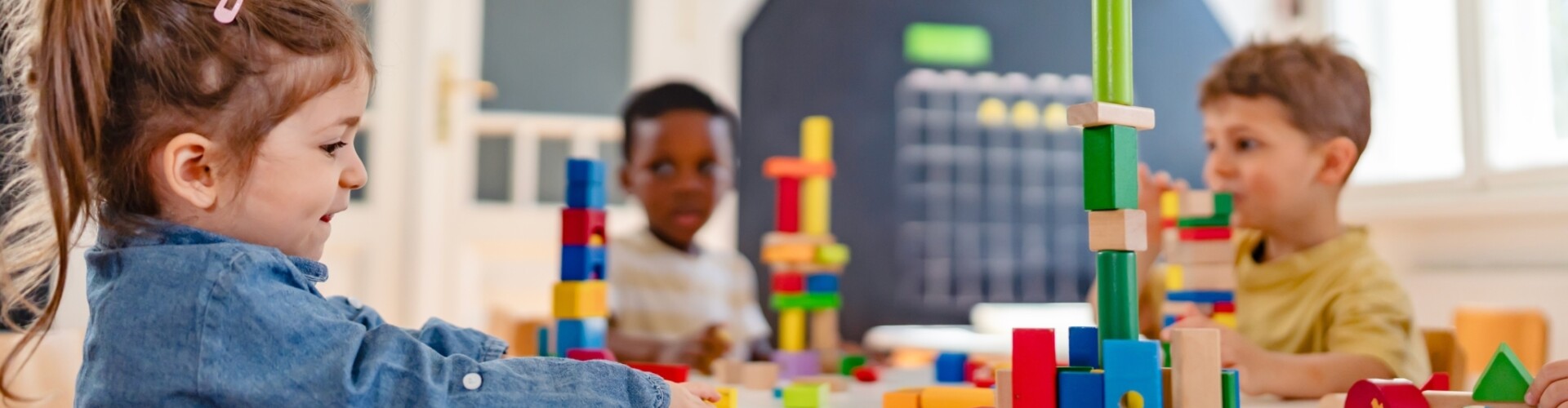
An accessible and inclusive pre-school programme in Zeeuws-Vlaanderen is of great importance to children, parents and the region as a whole. This is according to Rianne Vons, director and managing director of Kinderopvang Zeeuws-Vlaanderen. She bases this view, amongst other things, on a recent study by the Learning and Development Together research group at HZ University of Applied Sciences.
Since 2025, all toddlers in Zeeuws-Vlaanderen have been able to attend ‘De Voorschool’ free of charge, a form of early years care for children aged between 2.5 and 4 years. The municipalities of Hulst, Sluis and Terneuzen fund this form of care, partly because many parents in the border region had previously opted for childcare in Belgium. Many of these children went on to attend Flemish schools, causing primary schools in Zeeuws-Vlaanderen to see their intake decline. To turn the tide, Zeeuws-Vlaanderen has been experimenting with free options for years. For example, there were free groups in the border region, and between 2022 and 2024, free childcare was offered at three locations.The HZ research group ‘Learning and Developing Together’, led by professor Patrick van Schaik, has conducted research into the effects of the decision taken by the three local authorities in 2025. 800 parents took part. The research was carried out in collaboration with Kober, a childcare organisation in West Brabant which does not yet offer free childcare but wanted to gauge parents’ views on the matter.
The research in Zeeuws-Vlaanderen shows that 74 per cent of parents who are clients of Kinderopvang Zeeuws-Vlaanderen are making use of the scheme. 20 per cent of parents have been taking their children to the nursery more often since then. An equally large percentage have started working more following the decision. As less money is going towards childcare, they find that ‘working more pays off’. Parents who do not make use of the scheme often have children under the age of 2.5 years or are unaware that it is free.
Greater equality of opportunity
Pre-school also has a positive impact on the children. More than 70 per cent of parents notice that their toddlers are making progress in terms of language, motor skills, social skills and independence. It also provides them with more structure. Parents see it as good preparation for primary school. It contributes to equality of opportunity, as all children (regardless of their background or home situation) are given the same opportunities for development before they start primary school. “Anyone can make use of it, including people who are not so well-off,” said one of the respondents in the survey.
A significant proportion of parents say that if the pilot were to end, they would reduce their working hours again or look for alternatives in Belgium. Rianne Vons therefore advocates keeping it in place. “It contributes to the children’s development, but also supports enrolment in the Dutch education system, enhances the quality of life in our communities and helps to maintain local services in the region.”
The Zeeland Local Authorities Consultative Body (OZO) has asked The Hague to grant temporary leeway to local authorities in regions bordering Belgium to reimburse parents for the cost of a certain number of half-days of childcare per week. Under current legislation, this is not officially permitted. However, a new law currently in the pipeline is likely to make this possible. Kinderopvang Zeeuws-Vlaanderen wishes to continue offering free pre-school in the meantime. “In doing so, we are not only investing in children, but also in the future-proofing of our region.”